


One of the most common questions event planners ask is whether they should book a stage show or a close-up roaming performance.
The answer depends entirely on the type of event you are hosting and the experience you want your guests to have.
While both formats create memorable moments and audience engagement, they achieve it in very different ways.
A stage show is a shared experience.
Everyone in the room experiences the same moments together. Guests laugh together, react together and become part of a collective journey filled with mind reading, predictions, audience participation and impossible demonstrations. It creates a focal point within the event and is particularly effective when you want to bring the entire audience together for a memorable highlight.
Stage shows are ideally suited to conferences, gala dinners, awards evenings, corporate functions and large private celebrations. They work best when guests are seated and can give their attention to the performance.
Close-up roaming, on the other hand, becomes part of the event itself.
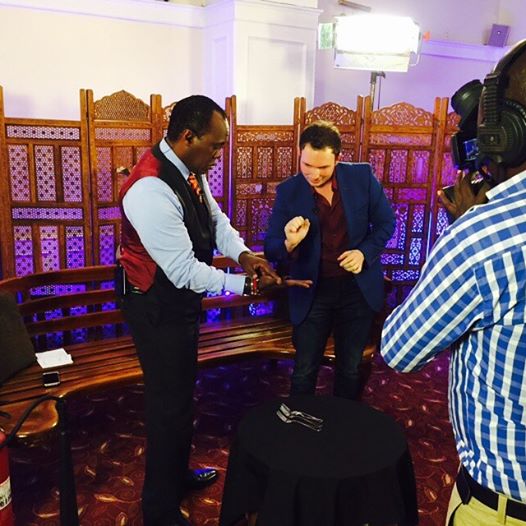
Rather than gathering guests together, the performer moves throughout the room, interacting with small groups at a time. The experience feels personal, intimate and often impossible because it happens just a few feet away from the audience.
Close-up roaming is particularly effective during cocktail functions, networking events, guest arrivals and occasions where guests are mingling freely. It creates conversation, breaks the ice and adds energy to the room without interrupting the flow of the event.
So which option is best?

If your goal is to create a powerful shared experience that everyone remembers together, a stage show is usually the strongest choice.
If your goal is to encourage interaction, create conversation and engage guests throughout the event, close-up roaming may be the better fit.
Many clients ultimately choose a combination of both.
Guests first experience the impossible up close during the roaming performance before coming together for a feature stage presentation later in the evening. This approach creates multiple touchpoints throughout the event and often delivers the greatest overall impact.
The most successful entertainment is not necessarily the biggest or the most elaborate. It is the option that best complements the format, flow and objectives of your event.
Understanding the difference between a stage show and close-up roaming is often the first step towards creating an experience your guests will never forget.
